Dr Natalia Banasik-Jemielniakpsychologist & psycholinguist
Dr Natalia Banasik-Jemielniak: I study what people say mean.
I study irony and non-literal language — how children learn to understand it and why some people are more ironic than others — as well as the language development of bilingual children.
- Affiliation
- Institute of Psychology, The Maria Grzegorzewska University, Warsaw
- Lab
- Language & Humour Lab — head
- Also
- Harvard Graduate School of Education — research fellow, Fulbright scholar 2023–24
About
I work where psychology meets linguistics.
I am an assistant professor in the Department of Methodology of Psychological Research at the Institute of Psychology, The Maria Grzegorzewska University in Warsaw, where I head the Language & Humour Lab. I have a long-standing connection with the Harvard Graduate School of Education — first as a pre-doctoral fellow, later as a visiting fellow and a Fulbright scholar.
I came to psychology through linguistics: I hold three master’s degreesI couldn’t decide — in applied linguistics and psychology (University of Warsaw) and in intercultural education (Freie Universität Berlin). My PhD at the University of Warsaw looked at how preschoolers understand irony.
I am interested in why people don’t simply say what they think — what they gain, what they risk — and how children learn to read between the lines, in one language or in several. I like cooperation. Usually.
Short bio for event programmes and introductions
Dr Natalia Banasik-Jemielniak is a psychologist and psycholinguist and an assistant professor at the Institute of Psychology, The Maria Grzegorzewska University in Warsaw, where she heads the Language & Humour Lab. She studies irony and non-literal language — how children come to understand it and why some people use it more than others — and the language development of bilingual children. She has conducted research at the Harvard Graduate School of Education, most recently as a Fulbright scholar (2023–24), has led projects funded by Poland’s National Science Centre and Ministry of Science, and co-edited Studying Verbal Irony and Sarcasm (Palgrave Macmillan, 2024).
Research
Four questions I keep coming back to.
4years: the age by which children can already understand simple irony
When do children start to understand irony?
When someone spills the milk and says “Great!”, adults know exactly what is meant. Children don’t always. I study how preschool and school-age children learn to recognise irony, how this relates to theory of mind and metapragmatic awareness, and how parents use irony — at home and in recordings from the CHILDES corpus.
In recordings of mothers talking with young children, irony appeared mostly in stressful moments — and was usually not aimed at the child.
Key papers
- 2019Children’s Comprehension of Irony: Studies on Polish-Speaking PreschoolersJournal of Psycholinguistic Research
- 2020“Wonderful! We’ve just missed the bus.” – Parental use of irony and children’s irony comprehensionPLOS ONE
- 2024“Mom said it in quotation marks!” Irony comprehension and metapragmatic awareness in 8-year-oldsJournal of Child Language
- 2019Children's Exposure to Irony in the First Four Years of Their Life: What We Learn About the Use of Ironic Comments by Mothers from the Analysis of the Providence Corpus of ChildesPsychology of Language and Communication
5countries and 3 languages in the SONATA project
Who speaks ironically — and why?
Some people are ironic every other sentence, others hardly ever. At the Language & Humour Lab we examine how the tendency to use irony and sarcasm relates to personality (including the Dark Triad), comic styles, mood, age and culture — among speakers of Polish, English and Turkish in Poland, the UK, the USA, Canada and Türkiye.
One result surprised us: age mattered more than country. Polish twenty-somethings are closer in their taste for irony to their peers in Türkiye, the UK and the USA than to Polish forty-somethingsno offence meant.
Key papers
- 2022Sarcasm use in Turkish: The roles of personality, age, gender, and self-esteemPLOS ONE
- 2023Dark triad predictors of irony and sarcasm use: An investigation in a Polish samplePersonality and Individual Differences
- 2023Individual Differences in Verbal Irony Use: A Systematic Review of Quantitative Psycholinguistic StudiesMetaphor and Symbol
- 2026It’s (More Than) Personal: The Mediating Role of Comic Styles Between Personality and Irony/Sarcasm UseMetaphor and Symbol
>50%of people worldwide use more than one language
How do children grow up with more than one language?
I study the language development of bilingual and multilingual children — especially those for whom Polish is one of the home languages in the USA, the UK or Germany. I am interested in how to measure their grammar reliably, what helps keep a heritage language alive, and how families make decisions about languages.
Raising children bilingually on purpose does not hold back their morphosyntactic development in Polish.
Key papers
- 2025Intentional bilingualism does not hinder morphosyntactic development in L1: A study with children speaking PolishInternational Journal of Bilingualism
- 2017How Does L1 and L2 Exposure Impact L1 Performance in Bilingual Children? Evidence from Polish-English Migrants to the United KingdomFrontiers in Psychology
- 2025Language assessment of Polish‐English bilingual children by speech and language therapists who do not speak Polish: A feasibility study of a novel scoring schema for Sentence‐Repetition‐TasksInternational Journal of Language & Communication Disorders
- 2022Mothers’ Perceptions of the Role of the COVID-19 Pandemic for Minority Language Maintenance in Their Bilingual Children (Speaking English and Polish) Living in the United KingdomPrima Educatione
147children tested online and face to face
How do we measure it — reliably?
You can’t weigh irony, and you can’t assess a child’s grammar with a single question. So much of my work is about method: adapting and testing tools (sarcasm scales, the Comic Style Markers, the Pathfinder test, sentence repetition tasks), comparing online and face-to-face testing, and checking what people actually mean when they answer questions about irony.
Children aged 4–7 scored higher on a sentence repetition task face to face than online — so norms should not be transferred automatically between formats.
Key papers
- 2026Comparing Online and Face-to-Face Administration of the Polish Sentence Repetition Task in Monolingual and Multilingual Children: Higher Scores in Face-to-Face TestingLanguage and Speech
- 2025Differences in sentence repetition tasks in studies on bilingual children’s language development: A systematic reviewInternational Journal of Bilingualism
- 2024Exploring the Polish Adaptation of the Sarcasm Self-report Scale Using the Think-Aloud Protocol: Three Lessons About Studying Irony Through QuestionnairesStudying Verbal Irony and Sarcasm
- 2025Moving intelligence measurement online: adaptation and validation of the Polish version of the Pathfinder general cognitive ability testQuality & Quantity
Irony decoder
We say one thing and mean another. Here’s how it works.
Irony is an utterance whose intended meaning differs from its literal one. We understand it by taking context, the speaker’s intention and tone of voice into account. Four examples — from research and from life.
Context The bus pulls away right in front of you.
Wonderful! We’ve just missed the bus.
meant: Terrible!
*MOT: wonderful ! we've just missed the bus .
%com: irony ; literal [+] ; intended [−]
Praise on the surface, frustration underneath. Many ironic remarks by parents sound like this — I have studied how such remarks relate to children’s understanding of irony. PLOS ONE, 2020
Context A colleague has spent the last hour scrolling through cat memes.
Don’t work too hard!
meant: Maybe get back to work?
*COL: don't work too hard !
%com: irony ; criticism in a joking form
Irony lets us criticise without saying anything directly — and retreat if needed (“I was only joking”). It can also bring people closer. Review of Communication Research, 2022
Context A friend tells you about a disappointing first date.
Well, he had nice shoes.
meant: Nothing else was nice.
*FRI: well , he had nice shoes .
%com: understatement ; literal [+] ; intended [−]
Formally a compliment. In practice, a review of the whole evening. Strictly speaking this is understatement rather than irony — but it is non-literal language too.
Context In a picture story everything goes wrong, and a character says:
We’re really lucky today!
meant: Everything is going wrong.
*CHR: we're really lucky today !
%com: irony in a story ; question for the child: what did she mean?
I use stories like this with children: a character says something nice while everything goes wrong, and we check whether the child knows what she really meant. Polish five- and six-year-olds did better at this than their peers in the USA. Journal of Psycholinguistic Research, 2019

Book
Book · 2024
Studying Verbal Irony and Sarcasm
Methodological Perspectives from Communication Studies and Beyond
How do you study something that, by definition, means something other than it says? This volume brings together methodological perspectives on verbal irony and sarcasm — from communication studies, psychology and linguistics. I co-edited it with Piotr Kałowski and Maria Zajączkowska.
My chapters
- Introduction
- Exploring the Polish Adaptation of the Sarcasm Self-report Scale Using the Think-Aloud Protocol
- Examining the Structure of the Sarcasm Self-Report Scale Cross-Culturally: Evidence from Canada, Poland, and Türkiye
- Further Directions: Overcoming the Bias of Research Published in English
Publications
Eight papers to start with.
Metaphor and Symbol, 41(3), 245–259article
doi:10.1080/10926488.2025.2603215
Language and Speech, 69(3), 918–945article
doi:10.1177/00238309251394372
International Journal of Bilingualismarticle
doi:10.1177/13670069251398735
“Mom said it in quotation marks!” Irony comprehension and metapragmatic awareness in 8-year-olds
Journal of Child Language, 51(3), 485–508article
doi:10.1017/S0305000923000399
Sarcasm use in Turkish: The roles of personality, age, gender, and self-esteem
PLOS ONE, 17(11), e0276073article
doi:10.1371/journal.pone.0276073
Review of Communication Research, 10article
doi:10.12840/ISSN.2255-4165.036
“Wonderful! We’ve just missed the bus.” – Parental use of irony and children’s irony comprehension
PLOS ONE, 15(2), e0228538article
doi:10.1371/journal.pone.0228538
Children’s Comprehension of Irony: Studies on Polish-Speaking Preschoolers
Journal of Psycholinguistic Research, 48(5), 1217–1240article
doi:10.1007/s10936-019-09654-x
Projects
8projects led as principal investigator
Research takes time, people and funding.
I have led eight projects — funded by Poland’s National Science Centre, the Ministry of Science, my university and EFPSA — and worked on several more as a team member. Behind every one of them is a grant proposalthe most written, least read literary genre.
| Years | Programme | Project | Role |
|---|---|---|---|
| 2022–2026ongoing | NCN OPUS 212021/41/B/HS2/01036 | Finding the common denominator in the study of bilingual children’s language development: morphosyntactic skills measured by sentence repetition tasks | principal investigator |
| 2020–2023 | NCN SONATA 152019/35/D/HS2/01005 | Verbal irony use across cultures: the role of individual and socio-cultural factors | principal investigator |
| 2019– | APS | Family language policy of Polish families living in the USA | principal investigator |
| 2017–2019 | NCN PRELUDIUM 122016/23/N/HS2/01046 | Figurative language in child-directed speech: ironic utterances in the CHILDES corpora | principal investigator |
| 2017–2019 | EFPSA Junior Researcher Programme | Irony and humour across cultures (international project) | principal investigator |
| 2015–2016 | NCN ETIUDA2015/16/T/HS6/00333 | The development of social inference in children: verbal irony comprehension and theory of mind | principal investigator |
| 2015–2016 | MNiSW Mobilność Plus1267/MOB/IV/2015/0 | Comprehension of figurative utterances by bilingual children living in the United States | principal investigator |
| 2012–2015 | MNiSW Diamentowy Grant099/DIA/2012/41 | Social inference in preschool children: verbal irony comprehension and theory of mind | principal investigator |
| 2014–2017 | MNiSW NPRH | Phonology and morphosyntax of Polish children growing up bilingually after emigration to the UK | team member |
| 2012–2015 | EFS / IBE | Specific language impairment: diagnosis and intervention | team member |
| 2011–2015 | MNiSW / COST809/N-COST/2010/0 | Cognitive and language development of bilingual children at school entry | team member |
| 2011–2013 | COST Action IS0804 | Language Impairment in a Multilingual Society: Linguistic Patterns and the Road to Assessment | team member |
Lab
Language & Humour Lab
The Language & Humour Lab is based at the Institute of Psychology, The Maria Grzegorzewska University. It was founded at the height of the pandemic’s second wave, so for the first months we worked entirely online — which, in time, became a research topic in its own right.
We bring together people at different stages of their academic careers, from students to postdocs, and collaborate with researchers from Canada, Germany, Ireland, Türkiye and the USA, among others.
What we work on
- irony and sarcasm across cultures
- humour, comic styles and self-presentation
- irony comprehension in children and adults
- language development in bilingual children
- methods: questionnaires, tasks, online testing
For parents
Bilingualism is a lifelong project. A few tips to start.
For years I have talked with parents raising children in two languages — in the USA, the UK and Germany. Here is what research and those conversations suggest most often.
Speak the language you know best.
Talk to your child in the language you are most at ease in — usually your first language.
Talk with your child, not just to them.
From birth: say something, pause, wait for a response — any response — and carry on. Children learn language through interaction.
Name, point, ask, read.
Describe what is happening, point at things, ask questions and leave time for answers. Read aloud from the first months — how much parents talk to their children is clearly linked to vocabulary.
Create opportunities.
Other children who speak the language, books, films, Saturday school, calls with family, summers in the country of origin — the more people and situations, the better.
Give a reason to speak.
Motivation is key. A language that a child sees as useful and valued — outside the home, too — has the best chance of staying.
Speaking Polish at home makes sense. Keep doing it!
Further reading
- Barbara Zurer Pearson, Raising a Bilingual Child
- Joanna Kołak, Rozwój w dwóch językach
- Aneta Nott-Bower, Przepis na dwujęzyczność
Media
On irony, humour and bilingualism — in the press.
Wszystko co Najważniejsze
Dzieci osiągają lepsze wyniki w testach twarzą w twarz niż onlineChildren score higher in face-to-face tests than online
This is not an argument against online research.
Forum Akademickie
Niektóre żarty bardzo źle się zestarzałySome jokes have aged very badly
Laughter is a social phenomenon.
Biały Orzeł
Dwujęzyczność – od obowiązku po cieszenie się tym przywilejem!Bilingualism: from obligation to enjoying a privilege
Language is really a whole world.
Gazeta Wyborcza
Badam, co rozumieją dzieci, gdy mówimy im co innego, niż mamy na myśliI study what children understand when we say something other than we mean
When we say things indirectly, we strengthen our bonds.
PAP · Nauka w Polsce
Polaków uważa się za ironistówPoles are considered ironists
Language is part of our identity.
Dobra Szkoła Nowy Jork
Wykorzystać czas, kiedy dziecko chce nas słuchaćMake the most of the time when your child wants to listen
Children learn language through interaction.
Path
Linguistics, psychology, intercultural education — and back again.
Positions
- since 2018Assistant professor, Department of Methodology of Psychological Research, Institute of Psychology, The Maria Grzegorzewska University; head of the Language & Humour Lab.
- 2023–24Fulbright scholar and research fellow, Harvard Graduate School of Education.
- 2019–20Visiting fellow, Harvard Graduate School of Education.
- 2017–19Research assistant, Faculty of Psychology, University of Warsaw.
- 2015–17Pre-doctoral research fellow, Harvard Graduate School of Education.
- 2013–15Editorial secretary, Psychology of Language and Communication.
- 2012–15Research and analysis specialist, Educational Research Institute (IBE), Warsaw.
Fellowships & awards
- 2023–24Fulbright scholarship (Harvard Graduate School of Education).
- 2015/16Kosciuszko Foundation fellowship.
- 2015Foundation for Polish Science fellowship.
- 2011–12DAAD scholarship for the European Master in Intercultural Education (Freie Universität Berlin).
- 2011Summer Research Programme, University of Delaware (USA).
- 2010First award from the Foundation for the Development of the Education System and the European Commission for a language-teaching and cultural-exchange project in Puerto del Rosario, Spain.
Education
- 2017PhD in psychology, Faculty of Psychology, University of Warsaw. Thesis (in Polish) on verbal irony comprehension and theory of mind in children.
- 2012MA in psychology, University of Warsaw.
- 2012M.Ed., European Master in Intercultural Education, Freie Universität Berlin.
- 2009MA in applied linguistics, University of Warsaw.
After hours
After hours — no footnotes.
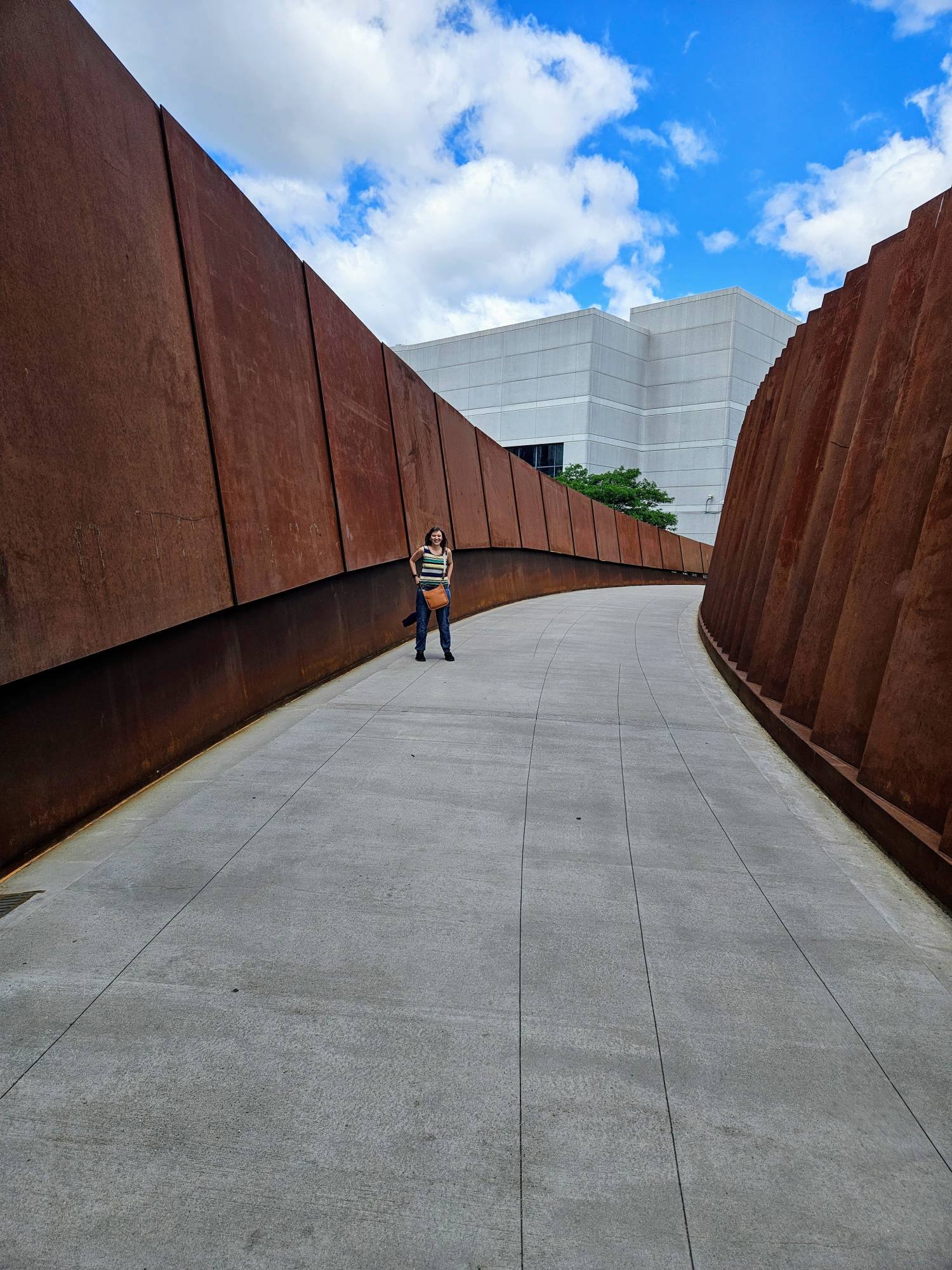
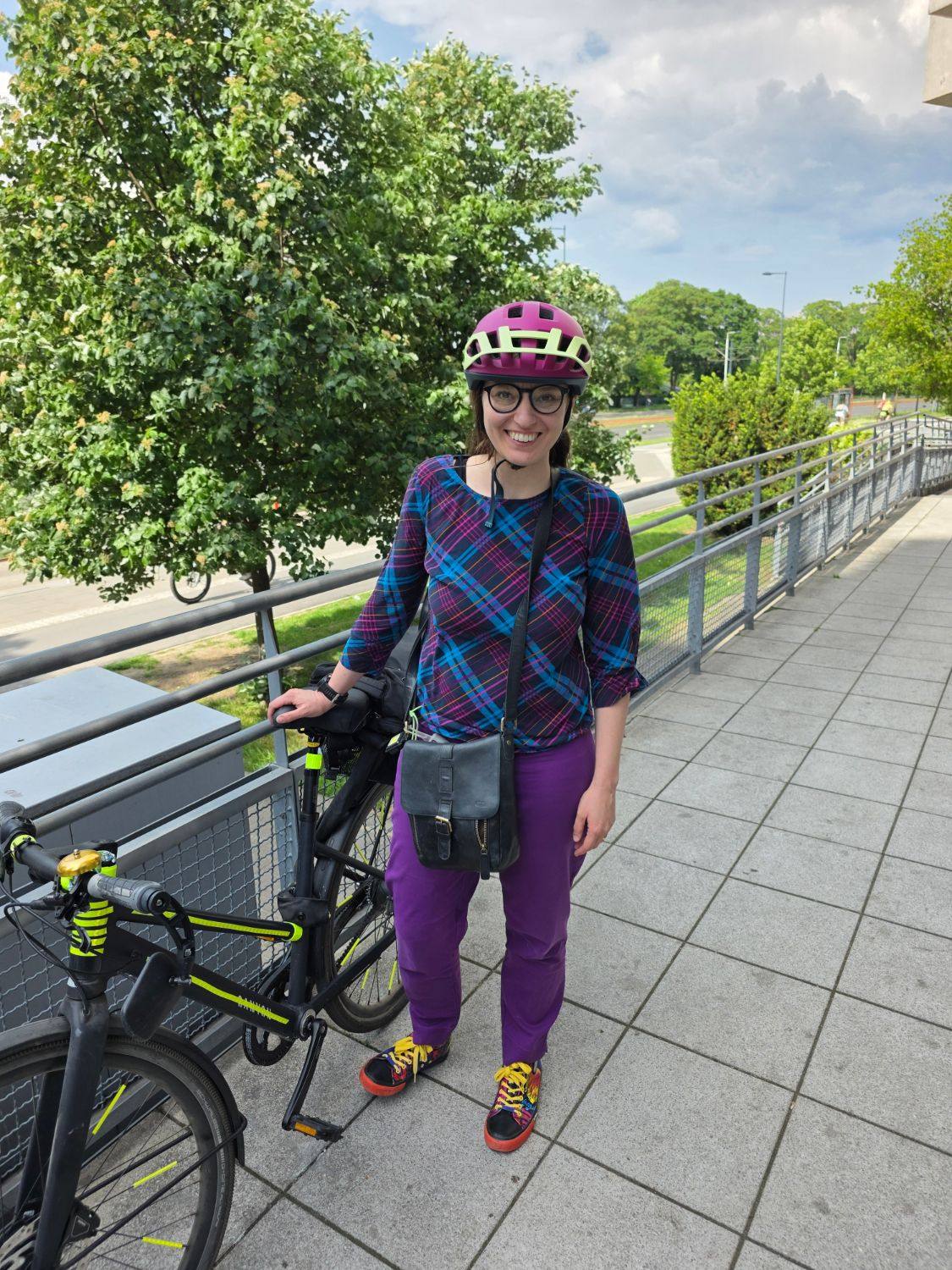
I run and I cycle. I cook — and happily eat — vegetarian and vegan food. And whenever I can, I travel.
- running
- cycling
- plant-based cooking
- travel

Contact
The simplest way is email.