Natalia Banasik-Jemielniak

Contents

  1. About
  2. Research
  3. Irony decoder
  4. Book
  5. Publications
  6. Projects
  7. Lab
  8. For parents
  9. Media
  10. Path
  11. After hours
  12. Contact
  13. All publications

Switch to read without the subtext — or with it.

Home / Publications

Publications

Journal articles, chapters, a book and assessment tools. Compiled from ORCID and Crossref; full bibliographic details are behind the DOI links.
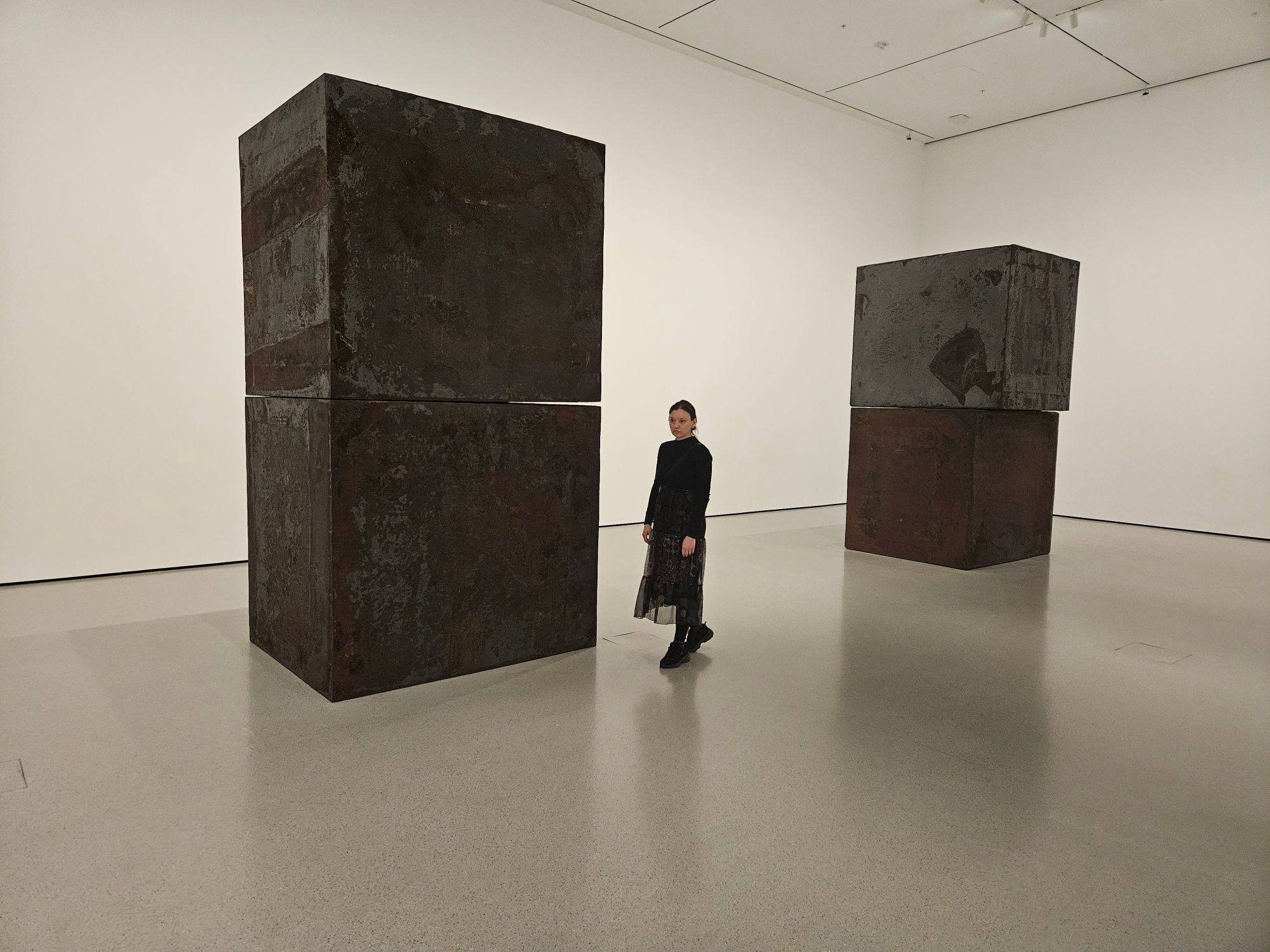
Natalia Banasik-Jemielniak walking between two sculptures made of massive, rusted steel blocks in a white museum gallery.
The burden of proof.Photo: private archive

2026

  1. N. Banasik-Jemielniak, M. Kochańska, M. Obarska, M. Zajączkowska, J. Świderska, E. Haman

    Comparing Online and Face-to-Face Administration of the Polish Sentence Repetition Task in Monolingual and Multilingual Children: Higher Scores in Face-to-Face Testing

    Language and Speech, 69(3), 918–945article2026

    doi:10.1177/00238309251394372

  2. N. Banasik-Jemielniak, A. Fanslau, S. Postek, K. Branowska, P. Kałowski, L. Kelley, L. McGuiness et al.

    It’s (More Than) Personal: The Mediating Role of Comic Styles Between Personality and Irony/Sarcasm Use

    Metaphor and Symbol, 41(3), 245–259article2026

    doi:10.1080/10926488.2025.2603215

  3. A. Fanslau, M. Olech, P. Kałowski, S. Ashley-Kot, A. Olechowska, A. Siemieniuk, N. Banasik-Jemielniak et al.

    Mood and comic style predictors of irony use in the Story-Based Irony Task

    HUMOR, 39(4), 609–632article2026

    doi:10.1515/humor-2026-0053

2025

  1. J. Kamykowska, M. Łuniewska, N. Banasik-Jemielniak, E. Czaplewska, M. Kochańska, G. Krajewski, A. Maryniak et al.

    Co-occurrence and cognitive basis of low language and low reading skills in children speaking a transparent language

    Reading and Writing, 38(3), 765–788article2025

    doi:10.1007/s11145-024-10537-4

  2. P. Kałowski, M. Obarska, J. Romaneczko, D. Walczak, N. Banasik-Jemielniak

    Differences in sentence repetition tasks in studies on bilingual children’s language development: A systematic review

    International Journal of Bilingualism, 29(6), 1499–1553article2025

    doi:10.1177/13670069251358991

  3. N. Banasik-Jemielniak, M. Obarska, M. Misiak, S. Wajs, M. Kochańska, M. Rowicka, P. Kałowski et al.

    Intentional bilingualism does not hinder morphosyntactic development in L1: A study with children speaking Polish

    International Journal of Bilingualismarticle2025

    doi:10.1177/13670069251398735

  4. S. Lally, N. Banasik-Jemielniak, E. Haman, S. Antonijevic

    Language assessment of Polish‐English bilingual children by speech and language therapists who do not speak Polish: A feasibility study of a novel scoring schema for Sentence‐Repetition‐Tasks

    International Journal of Language & Communication Disorders, 60(2)article2025

    doi:10.1111/1460-6984.70005

  5. M. Muszyński, N. Banasik-Jemielniak, T. Żółtak, K. Rimfeld, N. G. Shakeshaft, K. L. Schofield, M. Malanchini et al.

    Moving intelligence measurement online: adaptation and validation of the Polish version of the Pathfinder general cognitive ability test

    Quality & Quantity, 60(1), 329–354article2025

    doi:10.1007/s11135-025-02254-z

  6. A. Siemieniuk, K. Taczkowska, N. Banasik-Jemielniak

    Nonliteral Language in Polish Children's Literature: Cognitive and Linguistic Implications

    International Journal of Language and Literary Studies, 7(3), 191–214article2025

    doi:10.36892/ijlls.v7i3.2134

  7. P. Kałowski, M. Olech, A. Fanslau, S. Szumiał, K. Branowska, N. Banasik-Jemielniak

    Psychometric adaptation of the Comic Style Markers in a Polish sample

    HUMORarticle2025

    doi:10.1515/humor-2024-0098

  8. M. Zajączkowska, K. Branowska, A. Olechowska, A. Siemieniuk, P. Kałowski, N. Banasik-Jemielniak

    Sarcasm Use in Polish and Turkish: The Role of Personality, Age and Gender

    Journal of Psycholinguistic Research, 54(6)article2025

    doi:10.1007/s10936-025-10180-2

  9. P. Kałowski, K. Branowska, M. Zajączkowska, S. Bosacki, N. Banasik-Jemielniak

    Self-reported irony and psychosocial factors: A cross-sectional study

    Language and Dialogue, 15(3), 411–437article2025

    doi:10.1075/ld.00195.kal

  10. A. Olechowska, N. Banasik-Jemielniak, J. Rajchert

    Who understands irony? The relationship between cognitive flexibility, trait anger, and irony comprehension

    Personality and Individual Differences, 236, 112998article2025

    doi:10.1016/j.paid.2024.112998

2024

  1. S. Garfinkel, M. L. Rowe, S. Bosacki, N. Banasik-Jemielniak

    “Mom said it in quotation marks!” Irony comprehension and metapragmatic awareness in 8-year-olds

    Journal of Child Language, 51(3), 485–508article2024

    doi:10.1017/S0305000923000399

  2. J. Kuczmierowska, D. Kandemirci-Bayız, B. Akdeniz, Y. Abayhan, M. Zajączkowska, M. Glenwright, N. Banasik-Jemielniak et al.

    Examining the Structure of the Sarcasm Self-Report Scale Cross-Culturally: Evidence from Canada, Poland, and Türkiye

    In: Studying Verbal Irony and Sarcasm, 303–325chapter2024

    doi:10.1007/978-3-031-57172-5_13

  3. M. Zajączkowska, O. Zimna, M. Kurzawa, N. Banasik-Jemielniak

    Exploring the Polish Adaptation of the Sarcasm Self-report Scale Using the Think-Aloud Protocol: Three Lessons About Studying Irony Through Questionnaires

    In: Studying Verbal Irony and Sarcasm, 241–256chapter2024

    doi:10.1007/978-3-031-57172-5_10

  4. P. Kałowski, N. Banasik-Jemielniak, M. Zajączkowska, A. Sroka, E. Makhoul, E. Dryll

    Further Directions: Overcoming the Bias of Research Published in English

    In: Studying Verbal Irony and Sarcasm, 359–363chapter2024

    doi:10.1007/978-3-031-57172-5_16

  5. N. Banasik-Jemielniak, P. Kałowski, M. Zajączkowska

    Introduction

    In: Studying Verbal Irony and Sarcasm, 1–14chapter2024

    doi:10.1007/978-3-031-57172-5_1

  6. A. Fanslau, M. Olech, P. Kałowski, K. Branowska, A. Zarazińska, M. Glenwright, N. Banasik-Jemielniak et al.

    Let’s entertain others: the relationship between comic styles and the histrionic self-presentation style in Polish, British, and Canadian samples

    HUMOR, 37(3), 421–438article2024

    doi:10.1515/humor-2023-0116

  7. N. Banasik-Jemielniak, P. Kałowski, M. Zajączkowska (eds.)

    Studying Verbal Irony and Sarcasm: Methodological Perspectives from Communication Studies and Beyond

    Palgrave Macmillanbook (ed.)2024

    doi:10.1007/978-3-031-57172-5

  8. K. Ciechanowski, N. Banasik-Jemielniak, D. Jemielniak

    What’s hot and what's not in lay psychology: Wikipedia’s most-viewed articles

    Current Psychology, 43(16), 14761–14773article2024

    doi:10.1007/s12144-022-03826-0

2023

  1. A. Fanslau, P. Kałowski, M. Olech, M. Rowicka, K. Branowska, A. Olechowska, N. Banasik-Jemielniak et al.

    Dark triad predictors of irony and sarcasm use: An investigation in a Polish sample

    Personality and Individual Differences, 214, 112344article2023

    doi:10.1016/j.paid.2023.112344

  2. K. Branowska, D. Kandemirci-Bayız, Y. Abayhan, B. Akdeniz, N. Banasik-Jemielniak

    Humor style predicts sarcasm use – evidence from Turkish speakers

    HUMOR, 36(3), 439–461article2023

    doi:10.1515/humor-2022-0065

  3. P. Kałowski, M. Zajączkowska, K. Branowska, A. Olechowska, A. Siemieniuk, E. Dryll, N. Banasik-Jemielniak

    Individual Differences in Verbal Irony Use: A Systematic Review of Quantitative Psycholinguistic Studies

    Metaphor and Symbol, 38(1), 81–111article2023

    doi:10.1080/10926488.2022.2160253

2022

  1. N. Banasik-Jemielniak

    “Unicorn humour isn’t very subtle.” Graphic novels and comics as a potential didactic tool for teaching irony to children: the example of Dana Simpson’s Phoebe and her unicorn

    Journal of Graphic Novels and Comics, 13(2), 302–309article2022

    doi:10.1080/21504857.2021.1946115

  2. Ł. Okruszek, A. Piejka, N. Banasik-Jemielniak, D. Jemielniak

    Climate change, vaccines, GMO: The N400 effect as a marker of attitudes toward scientific issues

    PLOS ONE, 17(10), e0273346article2022

    doi:10.1371/journal.pone.0273346

  3. N. Banasik-Jemielniak, A. Lazar, A. Siemieniuk, J. Kondratowicz, O. Szczepankowska

    Mothers’ Perceptions of the Role of the COVID-19 Pandemic for Minority Language Maintenance in Their Bilingual Children (Speaking English and Polish) Living in the United Kingdom

    Prima Educatione, 6, 155–170article2022

    doi:10.17951/pe.2022.6.155-170

  4. N. Banasik-Jemielniak, D. Jemielniak, M. Wilamowski

    Psychology and Wikipedia: Measuring Psychology Journals’ Impact by Wikipedia Citations

    Social Science Computer Review, 40(3), 756–774article2022

    doi:10.1177/0894439321993836

  5. N. Banasik-Jemielniak, P. Kałowski, B. Akkaya, A. Siemieniuk, Y. Abayhan, D. Kandemirci-Bayız, E. Dryll et al.

    Sarcasm use in Turkish: The roles of personality, age, gender, and self-esteem

    PLOS ONE, 17(11), e0276073article2022

    doi:10.1371/journal.pone.0276073

  6. N. Banasik-Jemielniak, P. Kałowski

    Socio-cultural and individual factors in verbal irony use and understanding: What we know, what we don’t know, what we want to know

    Review of Communication Research, 10article2022

    doi:10.12840/ISSN.2255-4165.036

  7. N. Banasik-Jemielniak, M. Obarska

    Studying language development of bilingual children with the use of Sentence Repeat Exercise. Project on methodology

    Psychologia Wychowawcza / Educational Psychology, 66(24), 108–111article2022

    doi:10.5604/01.3001.0016.0969

2021

  1. N. Banasik-Jemielniak, D. Jemielniak, W. Pędzich

    Intercessory Rote Prayer, Life Longevity and the Mortality of Roman Catholic Bishops: An Exploratory Study

    Journal of Religion and Health, 60(6), 3871–3885article2021

    doi:10.1007/s10943-021-01214-9

  2. N. Banasik-Jemielniak

    Review of R. Kreuz, Irony and Sarcasm (MIT Press, 2020): by Roger Kreuz, Cambridge, MA, USA: MIT Press, 2020, 207 pages, 12.99$ ISBN: 9780262538268

    Metaphor and Symbol, 36(2), 116–118review2021

    doi:10.1080/10926488.2021.1887707

2020

  1. N. Banasik-Jemielniak, S. Bosacki, A. Mitrowska, D. W. Walters, K. Wisiecka, N. E. Copeland, L. Wieland et al.

    “Wonderful! We’ve just missed the bus.” – Parental use of irony and children’s irony comprehension

    PLOS ONE, 15(2), e0228538article2020

    doi:10.1371/journal.pone.0228538

  2. M. Marecka, M. Wrembel, A. Otwinowska, J. Szewczyk, N. Banasik-Jemielniak, Z. Wodniecka

    Bilingual children’s phonology shows evidence of transfer, but not deceleration in their L1

    Studies in Second Language Acquisition, 42(1), 89–114article2020

    doi:10.1017/S0272263119000408

  3. M. Bartczak, E. Haman, N. Banasik-Jemielniak

    Developmental Psycholinguistics: Old Questions, New Answers

    Psychology of Language and Communication, 24(1), 70–78article2020

    doi:10.2478/plc-2020-0004

  4. S. Antonijevic-Elliott, R. Lyons, M. P. O. Malley, N. Meir, E. Haman, N. Banasik, C. Carroll et al.

    Language assessment of monolingual and multilingual children using non-word and sentence repetition tasks

    Clinical Linguistics & Phonetics, 34(4), 293–311article2020

    doi:10.1080/02699206.2019.1637458

2019

  1. N. Banasik-Jemielniak, B. Bokus

    Children’s Comprehension of Irony: Studies on Polish-Speaking Preschoolers

    Journal of Psycholinguistic Research, 48(5), 1217–1240article2019

    doi:10.1007/s10936-019-09654-x

  2. N. Banasik-Jemielniak

    Children's Exposure to Irony in the First Four Years of Their Life: What We Learn About the Use of Ironic Comments by Mothers from the Analysis of the Providence Corpus of Childes

    Psychology of Language and Communication, 23(1), 1–13article2019

    doi:10.2478/plc-2019-0001

  3. N. Banasik-Jemielniak, B. Bokus

    Jak dzieci w wieku przedszkolnym uzasadniają użycie języka figuratywnego. Dane z badań z zastosowaniem Zadania Rozumienia Ironii (ZRI)

    Psychologia Wychowawcza, 57(15), 7–37article2019

2017

  1. E. Haman, Z. Wodniecka, M. Marecka, J. Szewczyk, M. Białecka-Pikul, A. Otwinowska, N. Banasik et al.

    How Does L1 and L2 Exposure Impact L1 Performance in Bilingual Children? Evidence from Polish-English Migrants to the United Kingdom

    Frontiers in Psychology, 8, 1444article2017

    doi:10.3389/fpsyg.2017.01444

  2. N. Banasik-Jemielniak

    Rozwój wnioskowania społecznego u dzieci: rozumienie ironii werbalnej a teoria umysłu

    Rozprawa doktorska, Wydział Psychologii, Uniwersytet WarszawskiPhD thesis2017

2016

  1. N. Banasik, K. Podsiadło

    Comprehension of Ironic Utterances by Bilingual Children

    Psychology of Language and Communication, 20(3), 316–335article2016

    doi:10.1515/plc-2016-0019

2015

  1. M. Smoczyńska, E. Haman, A. Maryniak, E. Czaplewska, G. Krajewski, N. Banasik, M. Kochańska et al.

    Test Rozwoju Językowego (TRJ)

    Instytut Badań Edukacyjnych, Warszawaassessment tool2015

2013

  1. N. Banasik

    Non-literal speech comprehension in preschool children – an example from a study on verbal irony

    Psychology of Language and Communication, 17(3), 309–324article2013

    doi:10.2478/plc-2013-0020

2012

  1. A. Otwinowska, N. Banasik, M. Białecka-Pikul, D. Kiebzak-Mandera, K. Kuś et al.

    Dwujęzyczność u progu edukacji szkolnej – interdyscyplinarny projekt badawczy

    Neofilolog, 39article2012

2011

  1. M. S. Velásquez, N. Banasik

    El idioma que une, el idioma que separa: el caso del Palenque

    Clínica y Análisis Grupal, 1(1), 49–56article2011